
Salads and Poke Bowls: How Safe Are They?
When we think of healthy grab-and-go meals, salads are usually the first thing that comes to mind. Salads are packed with essential nutrients that are good for your health. Not only are they low in fat and calories, they also contain dietary fibre that promotes regular bowel function and vitamins that boost your immune system.
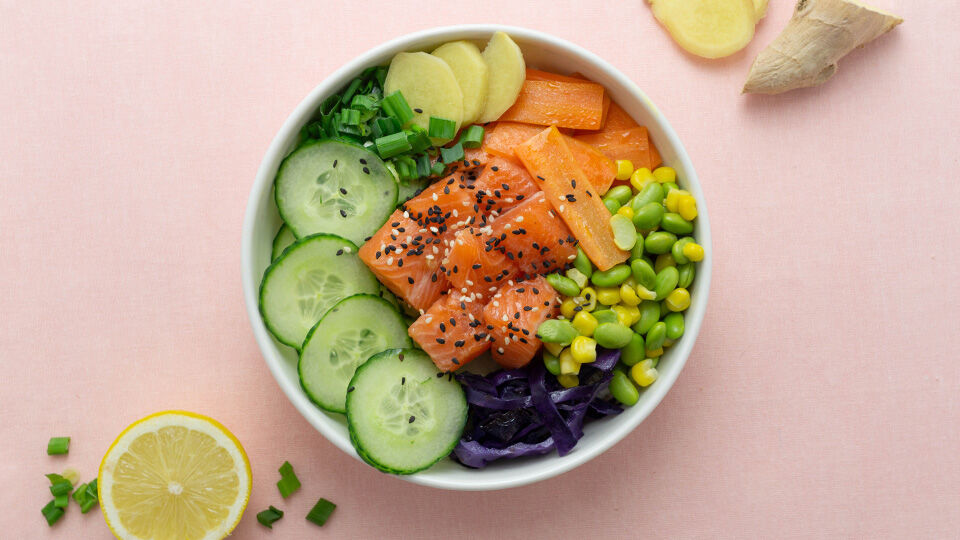
Salads are also often touted as the go to meal for weight loss and an essential part of a celebrity’s diet to maintain peak physical condition. Poke bowl, a salad dish made of raw fish and vegetables, has become a popular food option too in Singapore because of its nutritional value and convenience. But is it safe to eat them?
Food Poisoning Risk
In the United States, there have been numerous reports of salads being one of the largest sources of food poisoning. The most recent case in December 2021, involved the recall of several brands of salads linked to a Listeria (bacteria) outbreak.
Salads are associated with a higher risk of food poisoning due to harmful bacteria caused by the contamination of raw ingredients. Contamination can occur at any stage of processing and production:
- Water contaminated with dirt can leach into the soil that grows vegetables
- Unhygienic practices of handling raw food can cause cross-contamination
- Improper processing or storage of certain fish can cause scombroid poisoning even when the fish is cooked thoroughly
Are Organic Vegetables Safer?
 Many believe that organic vegetables are grown without chemical fertilisers and pesticides that make them safer for consumption.
On the contrary, organic vegetables can contain pesticides, albeit lower pesticide residues than non-organic vegetables. Researchers from Stanford University have found that organic foods rank slightly higher in food safety, with 30% lower pesticide residues than conventionally-grown ones.
However, there is limited evidence to support the notion that organic foods were necessarily healthier as pesticide exposure for both organic and conventional foods were both within food safety limits.
How Can We Reduce Our Risk Of Food Poisoning?
Following the basic rules of food safety can help to minimise your risk of food poisoning, also known as acute gastroenteritis. Here are some tips to note when buying salads off the shelf:
- Avoid buying pre-packaged salads that have been left out at room temperature
- Avoid buying salads with leafy greens that are bruised or damaged
- Consume your store bought salad within 1 to 2 hours. Otherwise, refrigerate it as soon as possible
- Always check the expiration date before consuming any salads
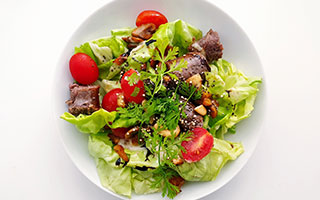
If you are preparing salads at home:
- Store and separate vegetables from raw meat in different compartments in the refrigerator
- Clean your hands with soap and water before preparing the salad
- Remove any bruised or damaged leafy green parts. Wash the remaining vegetables under running water before cutting and eating the salad
- Dry the leafy greens with a clean cloth or paper towel
- Use separate chopping boards and utensils when preparing raw meat and vegetables
- When cooking raw meat, make sure they are thoroughly cooked
When Should I Visit The A&E For Food Poisoning?
Food poisoning can potentially be life-threatening in serious cases. Visit the Accident and Emergency (A&E) if you or someone experiences severe symptoms such as:
- Severe dehydration
- Blurred vision or dizziness
- Persistent fever and vomiting
- Blood in stools
- Dark and concentrated urine
Reviewed by Dr Woo Shu Jeng, Specialist in Gastroenterology, Raffles Internal Medicine Centre.
Contributors

Related Specialist Centre

Our services include gastroenterology, geriatric medicine, nephrology, rheumatology & allergy and pulmonology care.


