

All You Need to Know About Egg Freezing
Egg freezing in Singapore
Singapore recently raised the age limit for women to undergo elective egg freezing (EEF) to 37 years old. Elective egg freezing (EEF) gives women a chance to prolong their reproductive life and more options to start a family in the future. By extending the upper age limit to 37 years old, more opportunities have opened up for a greater number of women. However, the drawback for older women is that the chances of success for this procedure will decrease with age.
In Singapore, the Ministry of Health (MOH) allows women to store their frozen eggs for as long as they wish on the condition that they return every 10 years to renew their consent (similar to frozen embryos) with the in vitro fertilisation (IVF). This is beneficial for women who are looking to store their eggs for future use. Studies have also shown that the frozen eggs do not “age” with time and are unlikely to deteriorate significantly over time. However, there are few studies on the outcome of frozen eggs after prolonged storage of 10 years.
How does elective egg freezing take place?
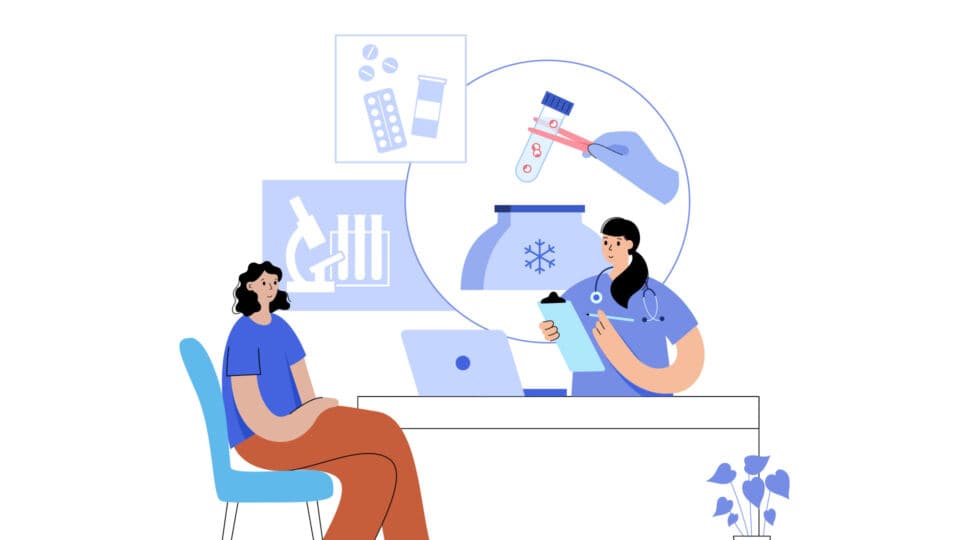
Your doctor will first need to test your suitability for this procedure. In addition, you will be counselled on the risks and side effects, as well as the expected success rates before you proceed with the various steps of the EFF procedure. Ovarian stimulation is first conducted with daily hormonal injection and ovarian monitoring with vaginal scans. Very often blood tests may also be performed. Egg extraction will be done via intravenous sedation (day surgery) procedure, followed by egg freezing and storage by the laboratory team. The frozen eggs are placed in a protective medium in tiny straws dunked in liquid nitrogen. This is a procedure called vitrification. The eggs are then kept there at very low temperatures of negative 196oC until the frozen eggs are needed.
Prepping for egg retrieval
The responsibility of prepping for pregnancy falls on both men and women. It is important that couples ensure that they are as healthy as possible before trying for a baby. This is the same for women considering egg freezing, to ensure that her eggs are also at their healthiest state possible.
Nonetheless, the EEF procedure for a woman is a vigorous two-week procedure and women should be in their peak mental and physical health before starting this journey. Women who are considering egg freezing should try to prepare themselves before the procedure by:
- Carrying out moderate exercises of at least 150 minutes per week
- Keeping a normal BMI level of 19 to 25. This helps with ovarian response and contributes to the success of the procedure
- Adopting a healthy diet
- Avoiding substances that are toxic to their eggs, such as smoking of cigarettes and high alcohol intake
- Controlling medical diseases such as diabetes mellitus and thyroid disorder
- Staying positive and reducing mental stress in their daily life
Effect of age on egg freezing
Egg quality and quantity are largely dependent on a woman’s age. Hence, the success rates are significantly higher for younger women in their mid-20s, followed by women in their mid-to-late 30s. For women in their mid-30s (above 35), the number of eggs collected are much lesser, of lower quality and have a higher chance of being abnormal. This results in lower survival rates, and hence, leading to lower fertilisation rates. Freezing your eggs in the mid-20s has to be balanced with the lesser likelihood of younger women eventually needing their frozen eggs because many do conceive spontaneously, versus the lower success rates if you freeze your eggs after 35 years old.
A woman considering EEF needs to take into account her age, egg reserves, other medical disorders, and her individual circumstances that can include the likelihood of future marriage, starting a family, and financial aspects.
Risks associated with older age
While there is no “best” time to utilise your frozen eggs, sooner is always better than later. It must also be understood that the frozen eggs do not guarantee a baby, and they merely represent a chance to conceive in the future. Even if the eggs themselves do not age, older women have higher risks of miscarriage, hypertension and diabetes during pregnancy, as well as intrauterine growth restriction of the foetuses, and potentially, complicated deliveries.
Beyond the natural age of menopause, pregnancy may also be associated with heart failure, strokes, and even death. In Singapore, women who are aged 45 or older, who intend to undergo assisted reproduction, is required to fulfil the MOH Extended Health Screening and Psychological Screening Criteria.
Factors affecting egg quality
The techniques of egg freezing and thawing vary from one fertility centre to another. However, this is thought to only contribute to a small percentage of the causes of eggs not surviving.
Other factors aside from age affecting egg quality are as such:
- Lifestyle factors
- Medical disorders
- Diseases like endometriosis, past ovarian surgery, cancer, sexually transmitted infections, etc.
- A woman’s BMI level (the higher the BMI, the lower the number of eggs collected)
Lesser-known facts of egg freezing
- The number of eggs a woman needs to store is greatly dependent on her age. Australian data has shown that for an average of 60 per cent chance of a live birth, a woman will need five eggs for a 30-year-old, 10 eggs for a 34-year-old, and 15 eggs for a 38-year-old. Hence, a woman considering EEF may need to be prepared for more than one egg collection attempt.
- The percentage of frozen eggs surviving warming is lower if the eggs were frozen when the women were above 36 years old (80 per cent) versus women below 36 years old at freezing (90 per cent).
- The fertilisation procedure used for the warmed frozen egg is IntraCytoplasmic Sperm Injection (ICSI), where a single sperm is injected into the cytoplasm of each mature egg to help fertilise the egg. This is due to the “hardening” of the outer layer (also known as zona pelllucida) of the eggs after the egg freezing procedure.
- The risk of natural (spontaneous) menopause in women is not affected by the egg collection and freezing procedure. This is similar to the procedure used to collect eggs for IVF or ICSI in infertile women. For instance, the procedure does not make a woman “lose” her eggs more than usual as every month some of these immature eggs will be lost anyway through death of the egg cells at the end of each menstrual cycle.
“FAQs: Frequently asked questions about egg freezing in Singapore”
Written by Dr Sheila Loh Kia Ee, Specialist in Obstetrics and Gynaecology, Raffles Fertility Centre
Contributors

More questions?

Egg freezing can be a challenging process physically and emotionally, and it is important that you choose a fertility centre with a healthcare team you are comfortable with.


