

Deep Vein Thrombosis: Long-distance Travel and Blood Clots Risk
Long journeys involving prolonged sitting can increase the risk of blood clots, particularly in people with certain medical conditions. Learn who is at risk, how to reduce your risk and which warning signs require medical attention.
Imagine arriving at your destination after a long-haul flight. You have spent hours sitting, and your legs feel stiff and tired. Later, you notice that one calf is aching and appears slightly swollen.
You might dismiss it as muscle fatigue from travelling. However, unexplained pain or swelling in one leg could be a sign of a more serious condition known as deep vein thrombosis (DVT).
Although DVT is treatable, recognising its warning signs early is important to prevent potentially life-threatening complications.
What is deep vein thrombosis?
DVT occurs when a blood clot forms in a deep vein, most commonly in the leg.
Think of your blood vessels as highways carrying blood throughout your body. A blood clot can act like a roadblock, obstructing normal blood flow and causing swelling or discomfort.
The greatest concern arises when part of the clot breaks away and travels through the bloodstream to the lungs. This can block blood flow through the lungs, causing a condition called a pulmonary embolism (PE), which can be life-threatening.
DVT can also cause longer-term complications, including persistent leg swelling, aching and skin changes. This is known as post-thrombotic syndrome.
Can sitting for too long cause DVT?
You may have heard of “economy class syndrome”, a term associated with blood clots during long-haul flights.
However, the problem is not the economy-class seat itself, but prolonged immobility.
Your calf muscles act like a natural pump. When you walk or move your ankles, these muscles help push blood from your legs back towards your heart. Remaining seated for extended periods reduces this pumping action and slows blood flow through the legs.
This is why DVT is associated with long flights, lengthy car or bus journeys and other situations involving prolonged immobility.
However, most healthy travellers have a low risk of developing DVT. The risk increases when other contributing factors are present.
Importantly, DVT can also develop in people who have not travelled recently.
Who is at risk of DVT?
Although DVT becomes more common with age, it can affect people of all ages.
Factors that increase the risk include:
Recent major surgery, hospitalisation or prolonged bed rest
These can reduce mobility and increase the likelihood of blood clots.
Pregnancy and the weeks following childbirth
Hormonal changes and changes in blood circulation increase the risk.
Oestrogen-containing medication
Certain contraceptive pills and hormone replacement therapy can increase the tendency for blood to clot.
Obesity and advancing age
Both are recognised risk factors.
Active cancer or certain inherited blood-clotting disorders
These can increase the likelihood of developing clots.
A personal or family history of blood clots
Previous DVT or pulmonary embolism, as well as certain inherited factors, can increase susceptibility.
Having one risk factor does not necessarily mean you will develop DVT. However, the risk can increase when several factors occur together.
If you have previously experienced DVT or pulmonary embolism, recently undergone major surgery or have several risk factors, consult your doctor before embarking on a long journey. Your doctor can assess your individual risk and advise on appropriate precautions.
What are the symptoms of DVT?
DVT symptoms can be subtle and are sometimes mistaken for muscle strain or travel-related discomfort.
Common symptoms include:
- Swelling: One leg, particularly around the calf or ankle, becomes noticeably swollen.
- Pain or tenderness: Discomfort in the calf or thigh, sometimes resembling a muscle cramp.
- Warmth: The affected area feels warmer than the surrounding skin.
- Skin changes: Redness or other unusual skin discolouration.
- More prominent surface veins: Veins near the skin may appear more noticeable.
These symptoms often affect one leg, although both legs can occasionally be involved. Some people may have few or no noticeable symptoms.
Seek urgent medical assessment if you develop unexplained swelling or persistent pain in one leg, particularly after a long journey or if you have other risk factors for DVT. Do not wait for all the symptoms to appear before seeking help.
When should I seek emergency medical help for DVT?
If part of a blood clot travels to the lungs, it can cause a pulmonary embolism.
Warning signs include:
- Sudden or unexplained shortness of breath
- Chest pain, particularly if it worsens when taking a deep breath or coughing
- Coughing up blood
- A rapid heartbeat
- Severe light-headedness, collapse or fainting
Seek emergency medical attention immediately if you experience these symptoms.
These symptoms may indicate a pulmonary embolism and require immediate emergency medical attention. A pulmonary embolism can occur even if you have not noticed any symptoms of DVT in your legs.
In Singapore, call 995 for an emergency ambulance if you suspect a pulmonary embolism. Do not wait for symptoms to improve or attempt to drive yourself to hospital.
Do compression stockings help prevent DVT?
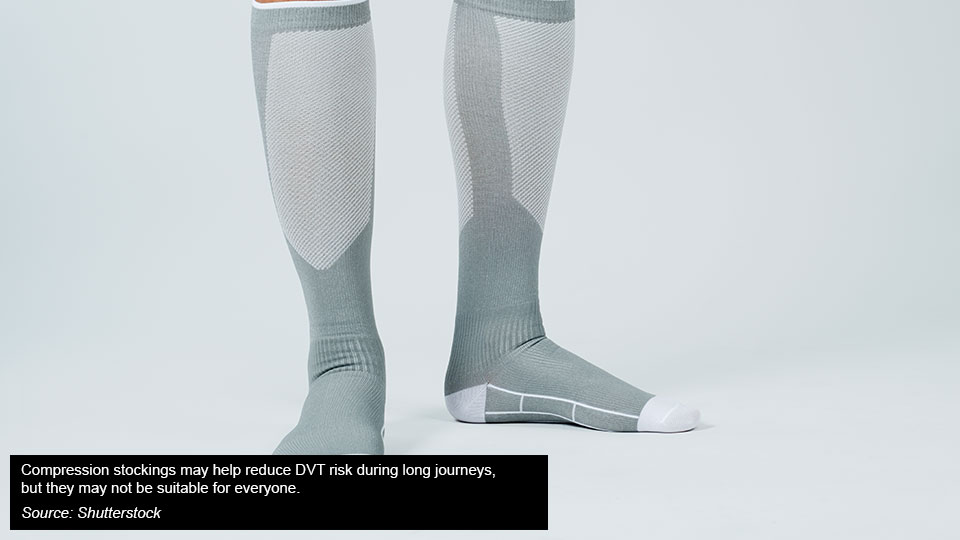
You may have noticed travellers wearing snug, knee-high stockings during long flights.
These are known as graduated compression stockings. Unlike ordinary socks, they apply the greatest pressure around the ankles, with pressure gradually decreasing higher up the legs.
This gentle compression supports blood flow towards the heart and helps reduce blood pooling in the lower limbs.
Compression strength is measured in millimetres of mercury (mmHg). For travellers at increased risk of DVT, properly fitted below-knee stockings providing approximately 15 to 30 mmHg of pressure at the ankle may be recommended.
However, compression stockings are not necessary for everyone. People with certain circulation problems, particularly peripheral arterial disease, should seek medical advice before using them.
For individuals who have previously experienced DVT, compression stockings may help relieve persistent leg swelling and discomfort in some circumstances. However, they are not routinely recommended solely to prevent another blood clot.
How can I reduce my risk of deep vein thrombosis (DVT)?
The reassuring news is that several practical measures can help reduce the effects of prolonged sitting and support healthy circulation.
| Preventive measure | What you can do |
|---|---|
| 1. Move regularly | During long journeys, stand up and walk whenever it is safe to do so. If travelling by car, take regular breaks to get out and stretch your legs. Avoid sitting continuously for extended periods. |
| 2. Exercise your legs while seated | If you cannot get up, lift your heels, flex your feet and rotate your ankles periodically. These simple exercises activate your calf muscles and help encourage blood flow. |
| 3. Stay adequately hydrated | Drink water regularly throughout your journey. Although adequate hydration supports general health, drinking extra water alone has not been proven to prevent DVT. Regular movement remains an important preventive measure. |
| 4. Maintain an active lifestyle | Regular physical activity and maintaining a healthy body weight can help support overall health. Avoid smoking, which is associated with various cardiovascular and circulatory risks. |
| 5. Understand your personal risk | If you have previously experienced DVT or pulmonary embolism, recently undergone surgery or have other significant risk factors, consult your doctor before long-distance travel. Depending on your circumstances, additional preventive measures may be recommended. |
Important
DO NOT start taking aspirin or blood-thinning medication solely to prevent travel-related blood clots without medical advice.
How is DVT diagnosed and treated?
If DVT is suspected, your doctor will assess your symptoms, medical history and risk factors. Investigations may include a blood test called D-dimer and an ultrasound scan of the affected leg.
Treatment usually involves anticoagulants, commonly referred to as blood thinners. These medications prevent existing clots from growing and reduce the formation of new clots while the body gradually breaks down the existing clot.
Many patients require treatment for at least three months, although the duration depends on the cause of the clot, the risk of recurrence and the individual’s bleeding risk.
With timely diagnosis and appropriate treatment, many people recover well. Early medical assessment is important to reduce the risk of complications, including pulmonary embolism.
Keep moving and stay alert
Whether you are travelling, working at a desk or spending a relaxing day at home, remember that prolonged immobility can affect blood circulation. Taking regular movement breaks and being aware of your personal risk can help you take practical steps to protect your health.
Pay attention to unexplained leg swelling or persistent discomfort, particularly after a long journey. If you experience sudden breathlessness, chest pain or other symptoms suggestive of a pulmonary embolism, seek emergency medical attention immediately.
DVT may not always cause obvious symptoms, but recognising the warning signs and seeking timely medical attention can make a life-saving difference.

In this article



