
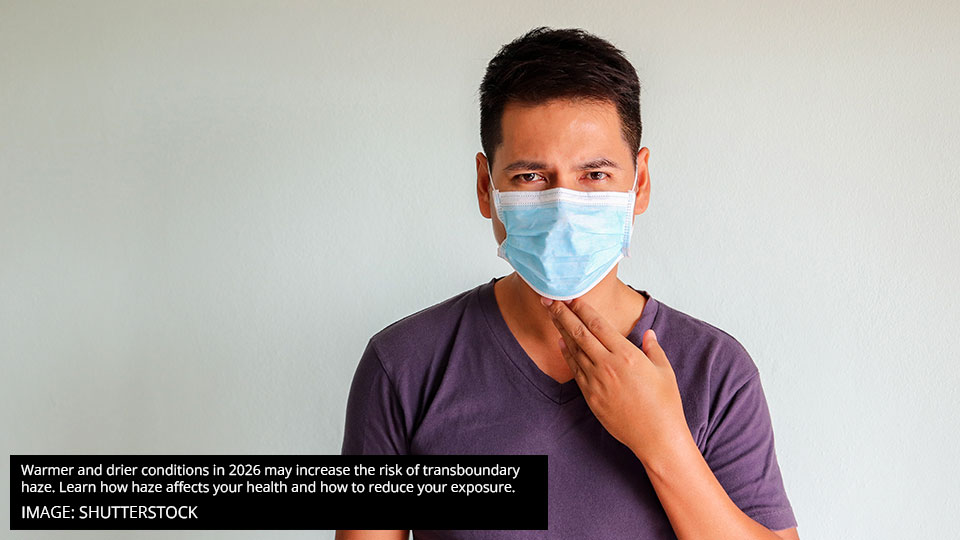
Impact of Haze and how to protect your respiratory health
Important to know: Haze contains fine particulate matter (PM2.5) that can travel deep into the lungs. Children, older adults, pregnant women, and people with chronic heart or lung conditions may be more affected.
With effect from 12 October 2026, the Ministry of Health (MOH) has activated the Public Health Preparedness Clinic (PHPC) Scheme and Haze Subsidy Scheme (HSS) in response to the haze situation in Singapore. Visit Raffles Medical PHPC clinics for assessment and treatment of haze-related Acute and Chronic conditions.
Haze can affect air quality and may cause irritation to the eyes, nose, throat and respiratory system. People with existing heart or lung conditions, such as asthma or chronic obstructive pulmonary disease (COPD), may experience worsening symptoms after exposure to haze.
This is particularly relevant during periods of El Niño, which can bring warmer and drier conditions to Singapore and the surrounding region. These conditions can increase the risk of regional fires and transboundary haze.
In 2026, the Meteorological Service Singapore (MSS) has forecast El Niño conditions to develop from June to July. Together with a positive Indian Ocean Dipole, these conditions are expected to bring warmer and drier weather from June to October, increasing the risk of transboundary haze affecting Singapore and the region.
Knowing how haze can affect your health and what you can do to reduce exposure can help you stay prepared.
What is haze?
Haze occurs when fine particles and other pollutants are suspended in the air. In Singapore, transboundary haze can occur when smoke from regional fires is carried across borders by prevailing winds.
One of the main pollutants of concern during haze is PM2.5, which refers to fine particulate matter measuring 2.5 micrometres or smaller. These tiny particles can travel deep into the respiratory system when inhaled.
Does El Niño cause haze?
No, not directly.
El Niño is a climate phenomenon that can bring warmer and drier conditions to Singapore and the surrounding region. During prolonged dry periods, the risk of regional fires can increase. Smoke from these fires can then contribute to transboundary haze.
The severity of haze depends on several factors, including fire activity, weather conditions and wind patterns.
How does haze affect your health?
| Haze can irritate the: | You may experience: |
|---|---|
|
|
People with existing heart or lung conditions, such as asthma, COPD or other chronic conditions, may be more sensitive to haze. The effects can also vary depending on the level and duration of exposure, as well as an individual’s underlying health.
Who should take extra care during haze?
Some people may be more sensitive to the effects of haze, including:
- Children
- Older adults
- Pregnant women
- People with asthma
- People with COPD
- People with other chronic lung conditions
- People with chronic heart conditions
If you fall into one of these groups, pay closer attention to air-quality readings and health advisories when haze levels increase.
If you have a chronic heart or lung condition, make sure you have your prescribed medication readily available and follow your doctor’s advice.
How can you protect yourself during haze?
There are several steps you can take to reduce your exposure to haze.
1. Check the air quality
Before heading outdoors, check the latest air-quality information and health advisories.
In Singapore, the National Environment Agency (NEA) provides 1-hour PM2.5 readings and 24-hour PSI forecasts.
1-hour PM2.5 reading: Useful for deciding whether to carry out an activity now, such as exercising outdoors.
24-hour PSI forecast: Useful when planning activities for the following day. Check the latest readings before planning prolonged or strenuous outdoor activities.
2. Adjust your outdoor activities
When haze levels increase:
- Reduce prolonged outdoor activities.
- Avoid strenuous outdoor exercise when advised.
- Consider exercising indoors instead.
- Choose less strenuous activities where appropriate.
Children, older adults, pregnant women and people with existing heart or lung conditions should take additional precautions.
If you have asthma, COPD or another chronic condition, follow your doctor’s advice on physical activity during periods of poor air quality.
| 24 hour PSI forecast | 0–50 Good |
51–100 Moderate |
101–200 Unhealthy |
201–300 Very Unhealthy |
>300 Hazardous |
|---|---|---|---|---|---|
| Healthy persons | Normal activities | Normal activities | Reduce prolonged or strenuous outdoor activity | Avoid prolonged or strenuous outdoor activity | Minimise outdoor activity |
| Elderly, pregnant women, children | Normal activities | Normal activities | Minimise prolonged or strenuous outdoor activity | Minimise outdoor activity | Avoid outdoor activity |
| Persons with chronic lung or heart disease | Normal activities | Normal activities | Avoid prolonged or strenuous outdoor activity | Avoid outdoor activity | Avoid outdoor activity |
PSI activities advisory source: https://www.moh.gov.sg/others/haze/
24 hour PSI monitoring: https://www.haze.gov.sg/
1 hour PM2.5 monitoring: https://www.haze.gov.sg/resources/1-hr-pm2.5-readings
3. Keep indoor air clean
When haze levels are elevated, keep windows and doors closed to reduce the amount of outdoor air entering your home.
You can also:
- Use an air purifier if available.
- Use air-conditioning where appropriate.
- Avoid smoking indoors.
- Reduce activities that produce additional indoor air pollutants.
- Clean surfaces regularly to remove settled particles.
When outdoor air quality improves, you can open your windows and doors to ventilate your home.
4. Consider wearing an N95 mask
If you need to spend several hours outdoors during periods of high haze, a properly fitted N95 mask can help filter fine particles such as PM2.5.
An N95 mask is generally not necessary for short periods outdoors or when you are indoors.
If you wear an N95 mask, make sure it fits properly around your nose and mouth, with minimal gaps around the edges.
If you have difficulty breathing or are unsure whether an N95 mask is suitable for you, speak with a healthcare professional.
What should you do if you develop symptoms?
If you develop mild symptoms such as a dry or itchy throat during haze, reducing your exposure and drinking enough water may help.
Seek medical attention if you experience persistent or worsening symptoms such as:
- Persistent coughing
- Wheezing
- Shortness of breath
- Chest discomfort or pain
- Difficulty breathing
If you have an existing heart or lung condition and your symptoms worsen, seek medical attention promptly.
Stay informed during periods of haze
Haze conditions can change depending on weather, wind and regional fire activity.
Staying informed can help you make decisions about outdoor activities and reduce unnecessary exposure.
For the latest information, check:
- NEA’s myENV app
- NEA’s air-quality information
- The latest 1-hour PM2.5 reading
- The latest 24-hour PSI forecast
- Official health advisories
Frequently Asked Questions about Haze
What is PM2.5?
PM2.5 refers to fine particulate matter that is 2.5 micrometres or smaller in diameter. These particles are small enough to travel deep into the respiratory system when inhaled.
Can I exercise outdoors during haze?
This depends on the air-quality level and your health. Check the latest air-quality readings and health advisories before exercising outdoors.
When haze levels increase, reduce or avoid prolonged and strenuous outdoor exercise according to the latest health advisory.
If you have asthma, COPD or another chronic heart or lung condition, take additional precautions and follow your doctor’s advice.
Who is most vulnerable to haze?
Children, older adults, pregnant women and people with chronic heart or lung conditions may be more affected by haze.
If you have an existing respiratory or heart condition, monitor your symptoms and follow the latest health advisories.
Does El Niño cause haze?
No. El Niño does not directly cause haze. However, it can bring warmer and drier conditions to Singapore and the region. During prolonged dry periods, the risk of regional fires can increase, which may contribute to transboundary haze.
For 2026, warmer and drier conditions expected from June to October may increase the risk of transboundary haze affecting Singapore and the region.
Take care of your respiratory health
While we cannot control weather conditions, wind patterns or regional fire activity, we can take steps to reduce our exposure to haze.
Check the air quality, adjust your outdoor activities when needed, keep indoor air as clean as possible and seek medical attention if you develop persistent or worsening symptoms.
Staying informed can help you make healthier choices when haze affects Singapore and the region.
This article was reviewed by Dr Low Teck Boon, Specialist in Respiratory Medicine, Senior Consultant, Raffles Internal Medicine Centre
Contributors