
Sleep and Mental Health: Why Quality Rest Matters
Quality sleep is a fundamental pillar of mental health. It supports mood regulation, cognitive performance, and emotional resilience. While often viewed merely as a period of physical inactivity, sleep is an active and essential biological process. During rest, the brain undergoes critical “housekeeping” tasks, including the removal of metabolic waste and the restoration of neurochemical balances.
Chronic sleep deprivation is associated with increased risks of anxiety, depression, and impaired executive functioning. Recognising habits like revenge bedtime procrastination is an important step towards reclaiming restorative rest and safeguarding long-term psychological well-being.
How sleep impacts mental health
The relationship between sleep and mental well-being is bidirectional. Poor sleep can negatively affect mental health, while mental health conditions can make it harder to sleep. This “feedback loop” means that addressing sleep issues can often lead to a significant improvement in clinical psychological outcomes.
- Emotional stability: Adequate rest helps the brain process emotional information. During rapid eye movement (REM) sleep, the brain specifically processes emotional experiences to reduce their immediate physiological impact. Sleep deprivation impairs emotional regulation, increases irritability, heightens stress responses, and reduces the ability to regulate negative emotions. Without sufficient rest, the amygdala, which is the brain’s emotional centre, becomes overactive, making us more reactive to minor stressors.
- Cognitive performance: During sleep, the brain consolidates memories through synaptic strengthening and reorganisation. This is vital for focus, decision-making, and problem-solving. When sleep is cut short, the prefrontal cortex, which is responsible for executive functions, struggles to function. This leads to “brain fog”, a lack of mental clarity, and a diminished capacity for creative thinking or complex task management.
- Clinical risks: Persistent insomnia is strongly associated with an increased risk of subsequent depression and can exacerbate existing mental health disorders. Clinical studies indicate that individuals with chronic insomnia are significantly more likely to develop anxiety disorders. Furthermore, sleep disturbances are often a precursor to more severe mental health episodes, making early intervention critical for long-term health.
What is revenge bedtime procrastination?
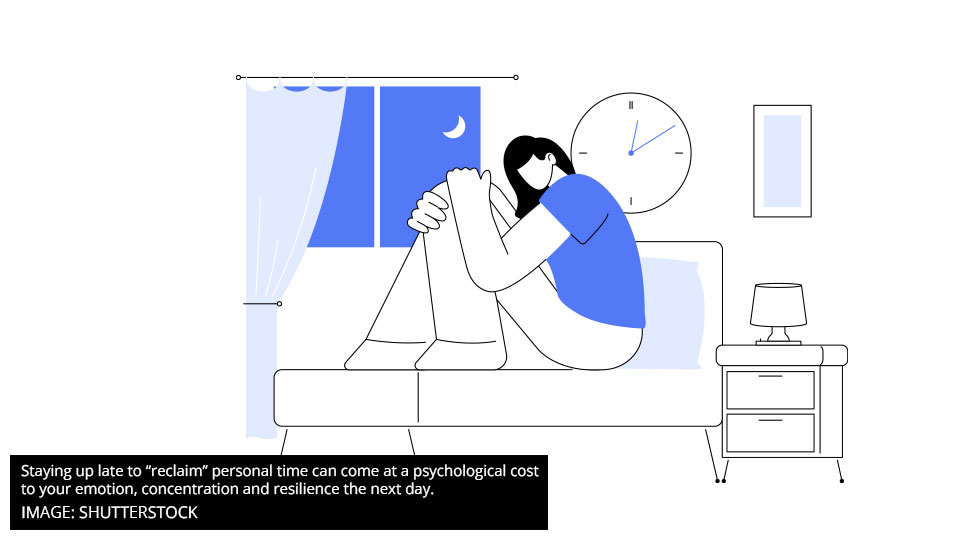
A growing trend in high-stress environments like Singapore is revenge bedtime procrastination. This refers to the habit of staying up late to “reclaim” personal time that feels lost during a busy workday. In a culture that prides itself on productivity, many individuals feel they have little control over their daylight hours. Staying up late becomes a symbolic “revenge” against a demanding schedule, allowing for a fleeting sense of autonomy.
- The psychological cost: Although it may provide a temporary sense of agency, it often results in a “sleep debt” that can impair emotional regulation, concentration, and resilience the following day. The late-night hours spent scrolling or watching media are often low-quality leisure, providing a dopamine spike that actually makes it harder for the brain to transition into deep sleep. This leads to a cycle where the individual is too tired to be productive the next day, leading to further stress and a repeat of the procrastination cycle.
- Breaking the cycle: Recognising that leisure hours “stolen” from sleep are ultimately less restorative than rest is the first step toward healthier sleep habits and better mental well-being. Shifting one’s perspective to view sleep as an act of “self-care” rather than a “waste of time” is a powerful cognitive transition that can help break this habit.
The health risks of sleep deprivation
Consistently getting less than the recommended seven hours or more of sleep per night for adults can have significant consequences for both mental and physical health. The cumulative effect of “missing” just one hour of sleep a night can be as detrimental to cognitive function as staying awake for a full 24 hours.
- Mental health decline: Sleep deprivation increases vulnerability to anxiety, low mood, irritability, and other mental health difficulties. It can lead to a sense of social withdrawal and a reduced ability to empathise with others, further straining personal and professional relationships.
- Physical comorbidities: Chronic insufficient sleep is associated with higher risks of hypertension, Type 2 diabetes, obesity, and cardiovascular disease. Sleep is when the body regulates insulin sensitivity and repairs the vascular system: without it, these systems face chronic physiological stress.
- Safety and productivity: Reduced alertness, slower reaction times, and impaired judgement can contribute to workplace errors, accidents, and poorer overall performance. In many industries, sleep-deprived employees pose a safety risk comparable to those under the influence of alcohol, highlighting the clinical importance of rest in professional environments.
Checklist: How to optimise sleep hygiene
To support better mental health and restorative sleep, consider these evidence-based sleep hygiene practices:
Manage Digital Intake
Blue light awareness:
Screens can suppress melatonin production and delay sleep onset. Disconnect from phones, tablets and laptops at least 60 minutes before bedtime. Consider using “night mode” if evening work is unavoidable.
Create a digital sunset:
Set a firm cut-off time for screen use at night. Replace scrolling with analogue activities such as reading a physical book or practising mindfulness.
Maintain a Consistent Sleep Schedule
Go to bed and wake up at similar times every day, including weekends, to regulate your circadian rhythm and support more restful sleep.

Optimise Your Sleep Environment
- Keep your bedroom cool, dark and quiet.
- Use blackout curtains, earplugs or white noise if needed.
- Aim for a room temperature of approximately 18–22°C.
- Ensure good ventilation to improve sleep quality.
Watch Diet and Activity Habits
Caffeine and alcohol:
Avoid caffeine later in the day and limit alcohol at night, as both can affect sleep quality and deep sleep cycles.
Regular exercise:
Exercise regularly during the day to improve sleep quality, but avoid vigorous activity within two to three hours of bedtime.
When to seek professional advice
If persistent sleep problems are affecting your mood, concentration, productivity, or daily functioning, it may be time to seek a formal clinical assessment. Sleep disorders such as sleep apnoea or chronic insomnia require professional diagnosis and management.
At Raffles Medical, our healthcare professionals can provide assessments to identify underlying causes of sleep disturbances and offer structured support for your mental and physical well-being. Taking action early can prevent short-term sleep issues from becoming chronic health conditions.
Having issues with sleep?
Visit your nearest Raffles Medical clinic for a clinical assessment today.
This article was reviewed by Dr Benjamin Lee, Specialist in Family Medicine, Raffles Medical.
Contributors